
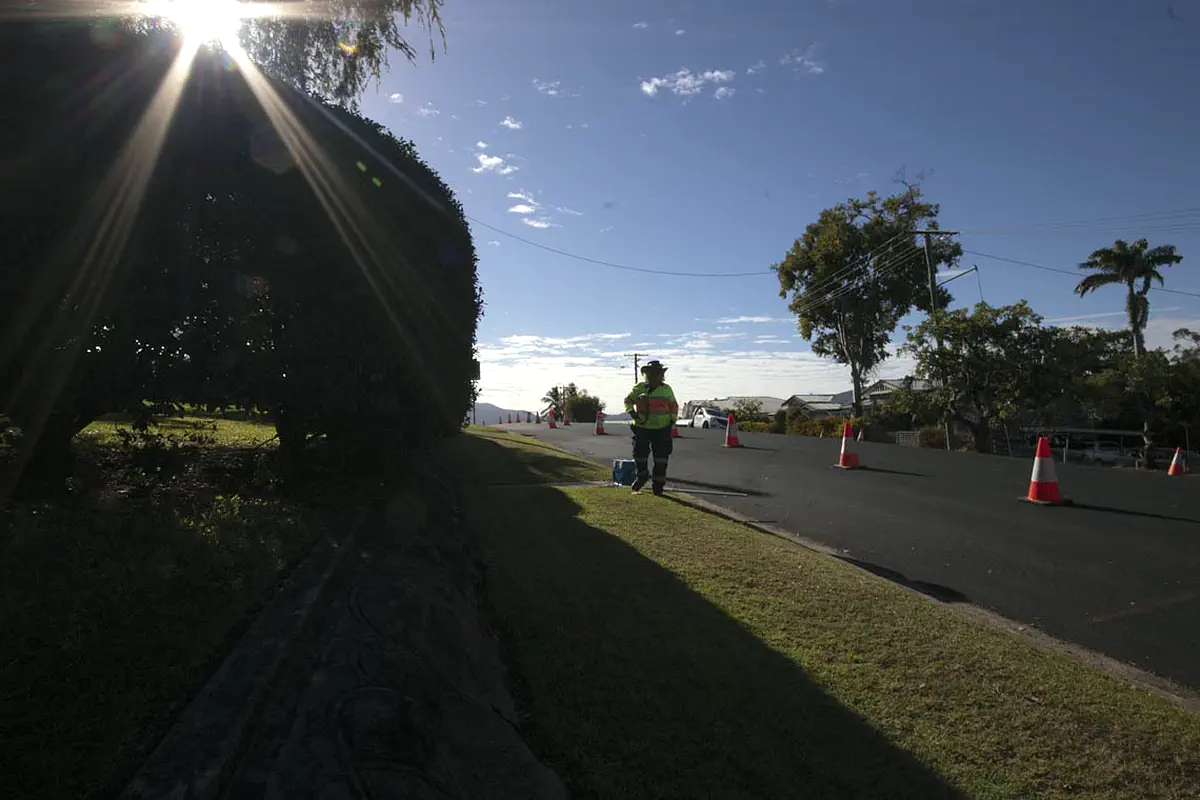
Traffic control Tumbarumba
In short: East Coast Traffic Control has a depot in Tumbarumba led by Area Manager Ruby, giving the Snowy Valleys a local crew rather than one driving in from Wagga Wagga. We cover Tumbarumba, Batlow, Adelong, Tumut, Talbingo and Khancoban for Snowy Valleys Council works, Transport for NSW roads, timber haulage routes and storm response, to the TfNSW TCAWS manual.
- Road authority
- Transport for NSW (South Region) and Snowy Valleys Council
- Also covering
- Tumbarumba, Batlow, Adelong, Tumut, Talbingo, Khancoban, Jingellic, Tooma, Rosewood, Tumblong
Traffic control in the Snowy Valleys: timber, tourists and winding roads
Tumbarumba is a timber town. Log trucks run from the softwood plantations to the mill and out along the Snowy Valleys Way and Tumbarumba Road to the Hume Highway, and a traffic control plan on these roads has to be designed for a loaded B-double coming downhill around a blind bend, not for a sedan. Batlow adds apple season trucks, Tumut adds the Snowy Mountains Highway and the Snowy 2.0 traffic heading for Talbingo, and the Alpine Way to Khancoban brings tourists who have never driven a mountain road in fog.
That is why we keep a crew here rather than driving in. Our Tumbarumba depot handles stop and slow on narrow rural roads, shoulder and lane closures on the highways, road closures for storm damage, fallen trees and slips, and the design and implementation of traffic control plans to Transport for NSW's Traffic Control at Work Sites (TCAWS) manual. Local crews know where the sight distance runs out.
Roads and road authorities in the Snowy Valleys
The Snowy Mountains Highway through Tumut, Adelong and Talbingo, the Snowy Valleys Way and the Hume Highway at Tumblong and Gundagai are state roads under Transport for NSW's South Region. The Alpine Way, Elliott Way and the Tumbarumba to Rosewood, Jingellic and Tooma roads, along with town streets in Tumbarumba, Batlow, Adelong and Tumut, belong to Snowy Valleys Council. Inside Kosciuszko National Park the road manager is the NSW National Parks and Wildlife Service and Transport for NSW.
Any work affecting travel lanes on a state road, or traffic signals on any road, needs a Transport for NSW road occupancy licence with a TCAWS compliant plan. Council roads need Snowy Valleys Council's own permit. Forestry roads are private and the forest manager's rules apply on top. We tell you which applies when we scope the job. See permits and road occupancy.
What the Tumbarumba crew does
Road maintenance on winding, high-speed rural roads is the core of it: resealing, guardrail, culvert and drainage works where sight distance, heavy vehicles and the weather all have to be in the plan. We support utilities and council works in the towns, forestry and timber haulage interfaces, and community events through the valleys. Because the crew is based in Tumbarumba we can mobilise quickly for planned works and respond around the clock to storm damage, fallen trees, slips and crashes.
The Tumbarumba depot works alongside our Wagga Wagga and Young depots, so a larger project draws on extra crews and equipment from across Southern NSW without losing the local knowledge.
How coverage works from the Tumbarumba depot
Ruby is the Area Manager for Tumbarumba and the person who scopes your job and builds the crew. The crew lives locally and carries signs, cones, portable traffic signals and VMS boards. Tumbarumba, Batlow, Adelong, Rosewood and Tumut are routine. Talbingo, Khancoban, Jingellic and Tooma are longer runs with start times confirmed at quote stage, and for multi-day work we base the crew near the site.
Controllers hold NSW accreditation and plans follow the TfNSW TCAWS manual; a Victorian card is accepted in NSW only under the SafeWork NSW recognition rules. See NSW traffic control licences. For Albury and the border see Albury traffic control; for Cooma and the Monaro see Cooma traffic control.
What to send for a Tumbarumba or Snowy Valleys quote
- Site location: road name and distance from the nearest town, and whether it is a Transport for NSW, council, national park or forestry road
- Dates, hours, day or night, and expected duration
- The work and plant, and whether log trucks or oversize loads use the road
- Whether you already hold a road occupancy licence or need help applying
- Whether you need a traffic control plan prepared, or already hold one
- Site contact, principal contractor and any TfNSW or council references
Common questions
Who approves traffic control on the Snowy Mountains Highway or Snowy Valleys Way?
Transport for NSW's South Region, because both are state roads; any work affecting travel lanes needs a TfNSW road occupancy licence and a TCAWS compliant traffic control plan. Snowy Valleys Council approves works on the Alpine Way, Elliott Way, the Tumbarumba to Jingellic road and town streets. We tell you which applies when we scope the job.
Does ECTC have a crew based in Tumbarumba?
Yes. The Tumbarumba depot has its own Area Manager, Ruby, and local controllers, which is unusual for a town this size. It exists because the Snowy Valleys' roads need people who know them. For larger jobs we add crews from our Wagga Wagga and Young depots under the same quote.
Can you work on forestry and timber haulage routes?
Yes. Timber haulage is the region's main heavy vehicle traffic and most of our rural road work here is planned around log trucks: longer advance warning, wider tapers and controllers positioned for downhill sight lines. On private forestry roads the forest manager's rules apply on top of the TCAWS plan.
Do you cover Tumut, Talbingo and Khancoban?
Yes. Tumut and Adelong are routine from Tumbarumba. Talbingo on the Snowy Mountains Highway and Khancoban on the Alpine Way are longer runs with a confirmed start time in the quote, and for multi-day work we base the crew near the site. The Alpine Way can close in winter, which we plan around.
How quickly can you respond to storm damage or a fallen tree on a valley road?
Because the crew is local we can respond around the clock to storm damage, slips, fallen trees and crashes, usually alongside Snowy Valleys Council or Transport for NSW crews. We do not promise a fixed response time, because mountain roads and weather decide that. We do promise to tell you honestly when we will be there.
Nearby locations
Need crews in Tumbarumba?
Send the job and your local Area Manager takes it from there, day or night.