
Emergency traffic control for cyclone, flood and storm recovery
In short: ECTC provides emergency traffic control across Queensland and New South Wales: closures, detours, lane blocks and access control for councils, disaster management groups, electricity distributors and recovery contractors after cyclones, floods, fires and storms. With 13 depots from Cairns to the Riverina, crews are local to the work and can be repositioned before a weather event hits.
Who calls us during an emergency
Council works and disaster coordinators, Local Disaster Management Groups, electricity distributors restoring power, water and telecommunications crews, arborists clearing trees, insurance assessors, landslip and bridge contractors, and the head contractors engaged for recovery works. In most cases the caller needs two things at once: a road closed safely so nobody drives into floodwater or a downed line, and a controlled way for crews to get in.
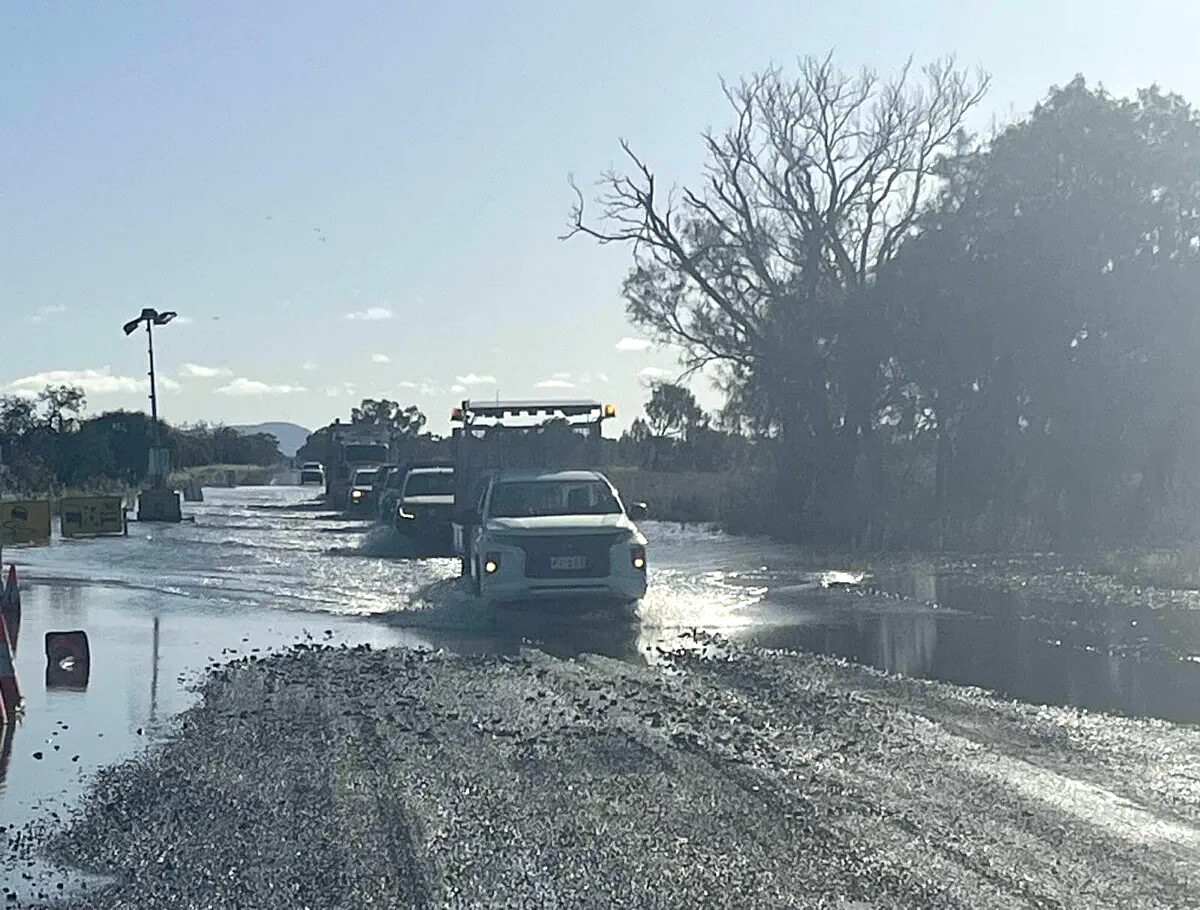
This is work ECTC does every wet season. Cyclone Jasper in Cairns, the February 2025 floods from Townsville to Proserpine, Cyclone Alfred in the Gold Coast hinterland, and the 2022 floods across the South West Slopes of NSW are the recent ones.
What emergency traffic control includes
Where a formal plan is required we produce it, but the first hours of a response are usually run under the road authority's emergency provisions and the council's direction. Our TMIs document what was set out and when, so the record exists for the authority and your insurer.
- Full and partial road closures with signage, barriers and controllers at the closure point
- Detours and alternate routes signed in both directions, with VMS trailers on approach roads for early warning
- Lane blocks and shuttle flows past debris, washouts, landslips and powerline hazards
- Access control for emergency services, utility crews, SES and council workers into closed areas
- Pedestrian redirection in town centres and near damaged infrastructure
- Traffic control for the recovery phase: debris clean-up, bridge and culvert inspections, landslip repairs, reseals, powerline and telecommunications restoration, building inspections
- 24/7 operations with Area Managers on call and crews mobilised from neighbouring depots when one region is stretched
How we respond
Before the event
From November to April the northern depots stay in contact with councils, clients and emergency services to identify flood-prone roads, isolation-prone communities, critical infrastructure access and detour options. VMS boards, signage trailers and vehicles are serviced and ready. Crews can be repositioned into high-risk areas ahead of a forecast.
The call
Ring 1300 011 203 or the Area Manager's mobile. Give the location, what has happened and who else is on site. The Area Manager confirms the crew and estimated arrival from the nearest depot.
Closure and access
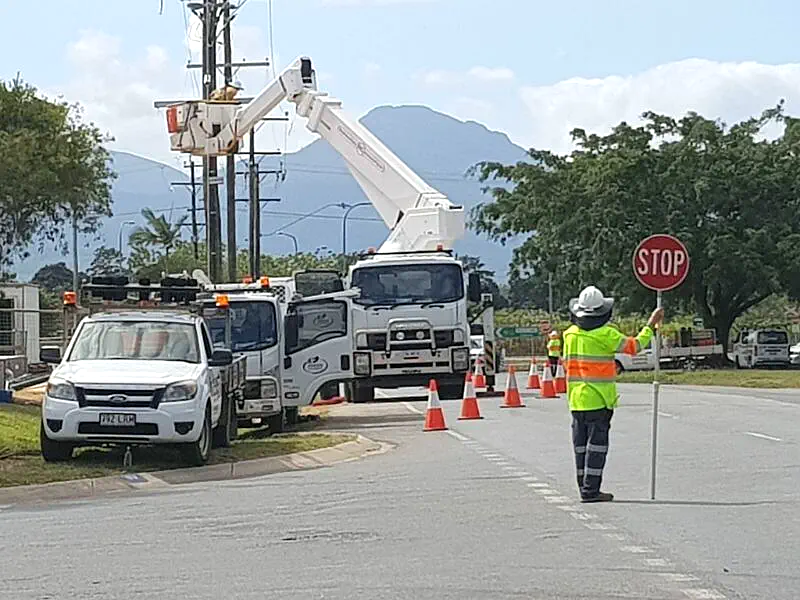
Crew closes the road or lane, signs the detour and holds the closure point. Recovery crews are let through under control. Pre-start, PPE for wet and windy conditions, and radio contact with the Area Manager are maintained through the shift.
Recovery works
Once the immediate hazard is contained, the job becomes a normal traffic control program for the repair contractors, with TGSs drawn for each site and permits lodged where the authority requires them.
Compliance during a disaster response
Emergency closures in Queensland are directed by the road authority, the council or Queensland Police under their disaster arrangements; our crews set out closures and detours to TMR's MUTCD Part 3 conventions so motorists see the signage they expect. Recovery works that follow are planned under the normal TMR and council permit process, and we lodge those as the program firms up.
In New South Wales, flood and storm closures are coordinated with the council and Transport for NSW, and the 2022 floods across the South West Slopes were managed with councils working alongside Transport NSW to keep passable routes open for supplies and the public. Our NSW crews hold NSW accreditation. Safety protocols rise during severe weather: extra pre-start checks each shift, wet weather PPE and lighting, fatigue management and crew rotation, Area Manager and operations support on call, and tracking of Bureau of Meteorology warnings. We do not operate where conditions are unsafe for the crew.
Response work we have done
Cyclone Alfred, March 2025, Gold Coast hinterland: narrow, forested roads blocked by fallen trees and tangled powerlines. Our crews were mobilised immediately to set detours, manage traffic around hazards and keep communication between crews on the ground, so Energex, arborists and council could start clearing without delay.
North Queensland floods, February 2025: closures, rerouting and access for emergency services across the Townsville to Proserpine corridor, including damage to the Paluma Range Road and Ollera Creek Bridge, and support for communities such as Ingham that were cut off. Cairns after ex-Tropical Cyclone Jasper, December 2023 and January 2024: damage assessment with the council, closures communicated to the public, and detours around affected areas.
Flooded roads in the South Western Slopes of NSW, 2022: councils in partnership with Transport NSW coordinated traffic through the less affected network, and our teams worked around the clock responding to new water levels on major routes so deliveries and the public could get through.
Equipment for emergency work
Utes with arrow boards and strobes, VMS trailers that can be programmed remotely as closures change, signage and barrier packs, floodlighting for night closures, UHF radios with a backup mobile contact for each crew, and TMA vehicles for closures on high-speed corridors. Everything is checked at the depot before cyclone season and again before it goes out.
Crews are allocated with travel and fatigue in mind, because a response can run for days. Where one depot is stretched, the neighbouring depot sends crews into the region, and the Area Manager stays on the phone with the council or client through the event so closures move as the water and the clean-up do.
Jobs like this
Closest depots
Common questions
How fast can you respond to a flood or storm closure?
It depends on where the site is and what roads are still open to reach it. Because crews are based in 13 regional depots and the operations line runs 24/7, response is usually from within the region rather than from the coast. Ring 1300 011 203 and the Area Manager will tell you the realistic arrival time.
Do we need a traffic management plan for an emergency closure?
Not in the first hours. Emergency closures run under the road authority's or council's direction, and our crews set them out to the standard signage conventions. Once the response moves into planned recovery works, we prepare TGSs and lodge permits as the authority requires.
Can you support utility crews restoring power after a cyclone?
Yes. Much of our storm work is controlled access for Energex, other distributors and telecommunications crews and the arborists clearing their way. We close the road or lane, hold the point, and let crews through safely. Our Ventia powerline work across Queensland depots is largely reactive for the same reason.
Do you work with councils and the Local Disaster Management Group?
Yes. We work alongside councils, their disaster response teams, Queensland Police and fire services, SES and emergency response contractors, taking direction on closures and keeping access clear for them. The relationships are set up before the season, not during it.
Will your crews work in severe weather?
We work in wet, windy and dark conditions with extra pre-start checks, wet weather PPE, lighting and crew rotation. We do not operate where conditions are unsafe for the crew, such as flooded zones or dangerous wind, and the Area Manager makes that call with you.
Need crews on site?
Send the job and your local Area Manager takes it from there, day or night.